Tuesday, April 18, 2017

Tuesday, February 7, 2017
Euro Nymphing

Oops, wrong picture
I have to admit, I am a dry fly bigot. That’s the way I like to fish, and more often
than not, that’s the way I do fish.
That being said, I’m the first to admit there are methods
which may be more effective, much more effective. The folks who fish competitively, in
international competitions, don’t fish with dries. They fish with nymphs.
Perhaps to a person, they use a method that can generally be called Euro nymphing. What is Euro nymphing? It consists of using a long rod, and fishing nothing but a long mono or flouro leader. Sound familiar?
I don’t suggest that all competitive fishers should switch
over to a fixed length line rod (it’s probably illegal within their self
imposed tournament rules). What I do
suggest that many of the techniques the competitive fisher folks use are
directly applicable to our chosen way to fish.
Much of the time, the Euro nymph folks fish their extended
leaders using a straight line. No
suspended indicator, no split shot, using a relatively lightly weighed
fly. They use a couple feet of bright
colored line inserted in the leader to help manage the drift of their fly/flies
and help detect takes.


If you’d like to pick up some tips to try, it’s worthwhile
to read up on the systems and methods used by the competitive fishers. You might pick up an idea or two to try next time you are wetting a line.
Monday, January 23, 2017
Sign of the times
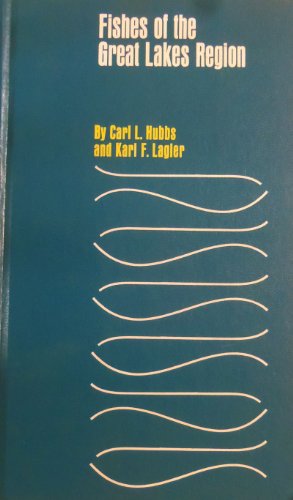
I
was at the library today, in the used book section, they were selling their
reference copy of Karl F. Lagler’s Fishes of the Great Lakes. Dr. Lagler was an influential and very well
respected ichthyologist . I was fortunate to have him as a professor.
Dr. Lagler was an extremely interesting and entertaining
individual. I always made sure to sit
within earshot of him on the bus when we went on field trips. He had a ton of great stories. One of my favorites was for some reason or
other, he had applied rotenone to a pond on a farmer’s field. The next day the farmer called and said 12 of
his cows had died. Lagler told him it
couldn’t be because of the rotenone, it was safe, so safe he’d come over and
drink a glass of it. He said he was
sweating bullets as he drove over to the farm, he wasn’t exactly sure what
might happen to him if he was to actually drink the stuff. When he got out of his car at the farm, the
farmer came out and apologized for bothering him. He went on to explain there was a
thunderstorm the previous night, and maybe the cows got struck by lightning. Lagler quickly agreed, got back in his car,
drove home and had a couple of stiff drinks.
Thursday, December 29, 2016
I got a new rod for Christmas
I got a new rod for Christmas, now what?
Tenkara is pretty simple - A stick, a string, a fly.
You got the stick, now you need some string.
Tenkara is pretty simple - A stick, a string, a fly.
You got the stick, now you need some string.
The good news, most if not all tenkara rods (or maybe more
generically:: fixed-length line rods) are pretty versatile in terms of
compatibly with many line types/sizes. You are using a relatively long rod to
manipulate a fairly short and manageable length of string.
There are at least a couple areas of consideration when it comes time to choosing which type/size of string to use:
- How a line casts
What type/size/shape of fly do you need to deliver (i.e. is the fly wind resistant ?)
There are at least a couple areas of consideration when it comes time to choosing which type/size of string to use:
- How a line casts
What type/size/shape of fly do you need to deliver (i.e. is the fly wind resistant ?)
What are the conditions (i.e.is it windy, Is the body of
water large and open or closed in and bushy, am I going to be fishing close in
or do I need to extend my cast as far as possible, how long of line do I need
to reach the fish, etc)
- How a line fishes (once the fly has been delivered)
Using a surface or sub surface (damp or deep) fly, dead drift or active presentation, what types of active presentation (swing, dap, twitch, skate, lift, etc)
Ask 10 fixed-length line fishers what line they prefer, you'll get at least 15 different answers. Try several different types and see what works best for how and where you like to fish.
It is the right line if it works for you.
- How a line fishes (once the fly has been delivered)
Using a surface or sub surface (damp or deep) fly, dead drift or active presentation, what types of active presentation (swing, dap, twitch, skate, lift, etc)
Ask 10 fixed-length line fishers what line they prefer, you'll get at least 15 different answers. Try several different types and see what works best for how and where you like to fish.
It is the right line if it works for you.
Friday, December 2, 2016


Tuesday, November 1, 2016
Why Tenkara?
I was skimming over a fly fishing forum today, one of the
topics was “Why Tenkara?” The original
poster wrote about what he thought some of the advantages were of fishing with
a tenkara set up, other replies leaned more toward why someone might want to
give fixed length rods a try.
I think fixed length line set ups do provide some anglers
with significantly greater success and enjoyment, for others, maybe not so
much. It’s always dangerous to make
blanket statements, but having talked to a pretty fair number of people, the
folks who typically enjoy tenkara the most tend to fall on either side of the
bell curve. Those folks tend to often be
beginner fly fishers, or folks such as myself that have been around the block,
maybe a few too many times.
In my mind, the primary advantage of a fixed length line set
up is that it reduces complexity. It’s
not necessary to spend time astream wondering if perhaps one should have
overloaded/underloaded the rod by a step up/down in line weights, or if a 15
foot leader maybe be just the ticket instead of the 12 footer I’m fishing with
now.
For beginners, complexity often means confusion, and a fixed
length rod eliminates most if not all the confusion regarding line weights,
tippet sizes and the like. The
experienced angler on the other hand has been there, done that. A fixed length line allows him/her to return
to simpler times, along the lines of what was old is now again new.
The other big advantage, it forces a discipline to fish a
short controlled line. This often is
helpful to all anglers. Put a reel on a
rod, and the natural inclination is to keep sneaking just a few more feet of
line out. The fishing always seems to
look more promising on the other side of the river. Other than some specialized situations,
longer lines are more difficult to control once they land on the water. This of course leads to less precision when
it comes to presenting one’s fly. A well
presented fly always out performs a fly presented less than optimally.
Thursday, August 11, 2016
Subscribe to:
Posts (Atom)
