Lake Michigan salmon numbers are way down from what has been the norm for the past 50 or so years.
It's going to be interesting (I fear not in a good way), to see what
effect the reduced salmon numbers are going to have on the resident
trout/bug populations over time. If a butterfly fluttering it's wings
can cause a hurricane, what happens when you remove a couple million
thrashing salmon tails.
In alot of respects, one might view a salmon as a semi truck, filled
with biomass, making a delivery from the big lakes to consumers
upstream. They provided tons (literally) of food in the form of roe and
flesh to the resident populations every fall. That gave all the
residents a chance to fatten up for the cold winter ahead.
If over time there aren't so many, if any, semi trucks delivering the
bacon, it could mean lean times for river residents getting ready for
winter.
I hope not, but of course, we'll see (whether we want to or not).
p.s. As I think about it, the big lake sourced feed bag continued well
into the spring/early summer with massive numbers of hatching fry.
Tuesday, October 20, 2015
Wednesday, September 2, 2015
Panfish Flies
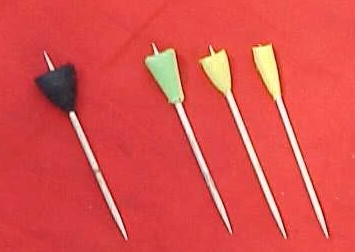
Panfish flies are a ton of fun to make and fish. They are extremely cheap, fast and easy to tie. Added bonus, they catch fish!
Friday, July 17, 2015
Just like Tom Sawyer
Very interesting and well written article -
http://www.idahostatesman.com/2015/07/16/3896993_tenkara-fly-fishing-is-catching.html?rh=1
Just like Tom Sawyer: Tenkara fly-fishing is catching on
http://www.idahostatesman.com/2015/07/16/3896993_tenkara-fly-fishing-is-catching.html?rh=1
Monday, June 29, 2015
Best Time to Fish
Someone in one of the fly fishing forums was looking for
suggestions regarding why they weren’t catching as many fish as they expected. They were fishing a few U.P. Michigan
Ponds/lakes for brook trout. He had put
in long days starting the day at 9:00 or 10:00 a.m., and fishing to 5:00 -5:30. OF course, the days were not a total loss -
beautiful scenery and several loons to keep him company.
My initial response, although I had never fished the ponds/
lakes mentioned, I will say, I've been fishing for a long time, in alot of
different places for alot of different fish. One of the biggest mistakes I
generically see folks make - fishing at the worst time of the day. Most folks
are coming out just as the fishing slows down, and go home just as the fishing
starts to pick up.
I have found you are best off to fish early in the morning, and late in the evening. Having been doing this for a long time, I can say it is often dramatic what a difference if makes. The difference is sometimes lessened on a cloudy day, but on a sunny day, you are much better off taking a mid day nap and resting up for an evening of fishing. Someone may be able to come up with an exception, but day in and day out, fishing the low light times of day is the way to go.
So wrote Rudyard Kipling - “Only mad dogs and Englishmen go out in the noon day sun”
My advice was pretty much solely based on my own personal experience. But as I thought about it, there are a number
of factual reasons to support my claim.
In a given lake or
pond, trout may indeed be at the top of the aquatic food chain. That's probably true as long as they don't
have to worry about what's in the air.
In ecosystems where loons, herons, kingfishers, fish eating raptors, etc
are present, fish drop down a notch or two in the predator/prey pyramid. Since the birds are all sight feeders, if
they are present, fish learn to stay scarce when they are highly visible from
above.
I'm not at all familiar with the biology of U.P. lakes and
ponds. Down in my neck of the Michigan
woods, zooplankton forms the basis of the food chain in alot of lakes. Many species of zooplankton exhibit a
behavior known as diurnal vertical migration.
In the evenings, the zooplankton swim toward the surface; at
dawn, they sink back down thru the water column. The stuff that eats the zooplankton tends to
focus their feeding behaviors during these migration periods. Zooplankton is particularly vulnerable during
these migrations. Their swimming motion is often species specific and readily recognizable. That motion may certainly be a feeding
trigger for the species that prey on the zooplankton. That in turn causes the larger fish to become
more active in terms of feeding on the smaller fish.
OF course the same thing applies to the aquatic bugs, fish
tend to become active when the bugs are active.
Alot of hatches occur during the early mornings and late evenings. Aquatic insects tend to avoid the bright sun
and mid day heat. Perhaps partially to
avoid detection, as well as avoid dehydration.
During the middle of the day from a prey fish perspective,
there is less activity going on, i.e. less chance of an easy meal, coupled with
the fact they are more likely to get eaten themselves by something in the air,
fish soon learn to retreat to the safety of the depths. Same way I use to tell my kid, not much good
happens after midnight, not much good happens to our fish friends at noon.
It really all comes down to risk vs. reward. Fish that make unwise choices about their
safety tend to get eaten, which in turn removes those behaviors from the gene
pool.
Wednesday, June 17, 2015
Ceramic Nymphs
I wasn't familiar with ceramic nymphs until I saw them on the French Nymph site -
http://www.french-nymphs.com/
These are some great looking flies, they are relatively heavy for their size and should cut through the water column very well.
Make sure you take a look at these if you like to fish subsurface.
http://www.french-nymphs.com/
These are some great looking flies, they are relatively heavy for their size and should cut through the water column very well.
Make sure you take a look at these if you like to fish subsurface.
Monday, June 8, 2015
The most important fly tying tool
Trick Question –
What’s the most important fly tying tool ?
Trick Answer - Your
fingers.
DISCLAIMER - It takes
a man who is comfortable in his own skin to talk about hand care
One thing I’ve found, it really pays to keep your
fingers/nails in good shape when it
comes to tying flies. Nothing gets in
the way more than ragged finger nails and patches of rough skin. For a long time, I just put up with it.
It wasn’t until I started hanging around with my guitar
playing buddies that I learned how to take care of my finger tips and
nails. Guitar players are meticulous in
the way they take care of their finger tips and nails. The need them smooth and well kept in order
to make sure they don’t get in the way of fretting and plucking strings.
I found out what they use to smooth things out – glass nail
files. A good glass nail file is worth
its weight in gold when it comes to maintaining health smooth nail and removing
rough patches of dead skin and such from finger tips.
It makes tying go so much smoother, wish I would have
figured this out about 40 years ago. If
you are tired of snagging materials and such, give one a try. (as with most things, don’t buy a cheap one,
it pays to get a good quality file, they are guaranteed to last a life time,
unless you drop and break it.) They work
so much better than nail clippers, sandpaper, emery boards, ...
I ordered a batch directly from the Czech Republic (for some
reason, they make the best files) for the folks in my fly fishing club. The guys and gals just love the way they
smooth out the rough spots on their nails and finger tips. I actually have a few left, if you’d be interested
in one, drop me a PM.
There, somehow I strangely feel better having come out of
the closet and having talked about hand care.
Thursday, May 7, 2015
Subscribe to:
Posts (Atom)