Monday, April 16, 2012

Some Simple Thoughts

I often am asked to recommend a specific rod for a specific river, stream or geographic area. The request often comes from a highly experienced reeled fly fisher. I sort of wish I could authoritatively state you need a 13’7’ XYZ rod with that has a soft 6.5:4 action coupled with a 12.75’ .014” fluorocarbon line which terminates with a 3.75 lb 3.6’ leader/tippet.

It very easy to get at least this level of detail on any forum when discussing what reeled fly rod outfit one should use to properly fish. As a matter of fact, it’s very easy to start what approaches a virtual shouting match when various camps weigh in regarding what is the “right” way to fish. Folks have come to expect a very exact and specific answer regarding what rod (or rods) they may need to fish a fixed length line outfit.

It’s at least slightly embarrassing to say “Most if not all the available tenkara rod and line combinations and permutations will work just fine. There will be minor variations to how the various combinations will feel, but the variances really are a matter of personal preference. All will fish effectively.

It is interesting that in many respects, we as fisher folks seem to be drawn to complexity like moths to a flame. Not that there is anything wrong, if that is what folks enjoy. Some may disagree, but I personally think it is a basic attribute of the simplicity inherit to fishing a fixed length line system. The equipment involved just works within the niche for which it is intended. While fixed length line systems aren’t appropriate for all types of environments or techniques, one doesn’t require a highly specialized set of equipment to effectively fish. To me that greatly adds to the enjoyment of using fly fishing using a fixed length line.

Friday, February 3, 2012

Dead Drift

I find it interesting that when fly presentation is mentioned to most fly fishers, it is interpreted to mean fishing one’s fly “dead drift”. I personally find that I am usually much more successful fishing an active presentation, so I sometimes wonder why the preoccupation with always fishing “dead drift”. Let me say up front, I think there is the occasion when that presentation is appropriate, I just don’t think it’s the best approach all the time.

As you think about it, unless a food item is indeed DEAD, it’s not very often an organism is just lazily “going with the flow”, laying on its back or belly idly drifting down stream. In most if not all cases, it’s using all the energy it can muster to go someplace. If it’s underwater, it is either trying to get to the surface to hatch, or back to the safety of the bottom when it’s in the process of being carried away (against its will) downstream. In moving water, there is little advantage for a bug to purposely head downstream. Chances are good it won’t have the strength to swim back upstream, so the river/stream is for all practical purposes a one way street. If the bug population does not actively try to hold its position, sooner or later it’s going to end up in a foreign environment, like Lake Michigan. So the point being, in these situations, there is at least an effort being made by the insect which will introduce some level of movement, however slight.

We all know one way bugs may use to avoid being carried away out to sea, is to sprout wings and fly back upstream a ways. In the case of mayflies, the bugs do seem to try to sit motionlessly while their newly sprouted wing dry and harden. Why would they have evolved this adaptation? Perhaps because it is the best strategy to avoid detection while they are vulnerable? Granted the predator/ prey relationship is an ongoing chess match, so once the bugs figured that out, the fish came to realize that was what to look for in regards to an easy meal. So certainly this is one situation where a “dead drift” will be effective. I will still maintain the point that the bugs figured out being still is preferable to floundering around, in terms of not being eaten, which seems to sway towards the idea that fish look for movement in their prey.

Of course caddis flies decided the best strategy was to get out of Dodge quickly, so they shoot up like a miniature Polaris missile. I’m not sure when a “dead drift” presentation would be effective while fishing a caddis imitation, unless it was to simulate a bug that had indeed died.

So when all is said and done, it seems the goal is to figure out a way to introduce subtle movement to indicate the presence of life to our offering. Of course, there are no absolutes, so sometimes no movement is the ticket, sometimes extreme movement is appropriate.

If you stop and think about it, there are at least a couple things that can convince a fish something is a bit of food. It can look like food, or act like food. Changing flies is an effort to find something that looks like food, changing presentation is an effort to make you fly look like food.


Saturday, December 10, 2011

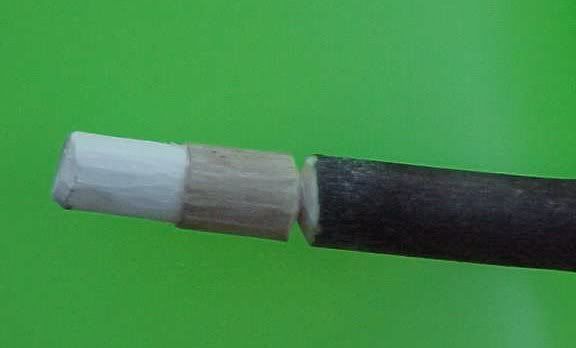
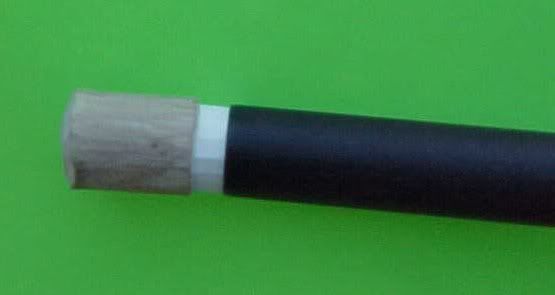
Carve a rod cap

Next time you find yourself sitting around the campfire with your trusty pocket knife handy, grab a branch and make yourself a spare (or replacement) rod cap.


As with all things tenkara, take it slow and easy, use a gentle hand.

Make sure you don't try to force a peg that is too big into a hole that is too small. You could possibly damage you rod. You also need to be sure not to try to force the cap too deep into the rod, remember there are rod sections down there. If you have your current plug handy, you can use it as a template regarding length and diameter.

Thursday, December 8, 2011

Got a dandy early Xmas gift from a virtual fishing buddy of mine. Alan graciously sent me a copy of his album, The Last Cast. Anyone who enjoys fishing or the outdoors will enjoy Alan's tunes.

I personally think this is the perfect music to listen to while tying flies. Even if it doesn't improve the look of your flies (but it very well might), it will improve your mood. You can listen to some of Alan's tunes on his website -

http://alancayn.net/music

Monday, October 31, 2011

Fly Fishing Complexity

I recently read a thread in a fly fishing forum asking if fly fishing is becoming too difficult for beginners to get started.

I’ve often thought how lucky I was to have started fly fishing 50 years ago. If I was just getting started today, I don’t think I would take up the sport. I started long before Al Gore thought up the internet. I literally started fly fishing as a youngster using a willow branch, piece of mono, and a “fly” consisting of a piece of sponge with rubber band legs, tied onto a hook with some sewing thread. I didn’t personally know anyone else who fly fished to show me the ropes. I did have access to a small canal that held stunted “sunfish” that were always willing to attack anything that came their way. I spent countless hours over at least a few years joyfully occupied. It wasn’t until a couple years later that my parents bought me my first fly rod and fly reel. They didn’t know anything about tackle, and based their decision solely on buying a rod and reel that were cheap. It didn’t really matter to me, I used that rod and reel for the next 6 or 7 years, caught tons of bluegills.

I took a few years off from fly fishing my last few years of high school, and while in college. Once I started working, I started fly fly fishing again, an my fly fishing arsenal grew at an exponential rate. I’m sure I spent more than the total economy of some small third world countries. Pouring over fishing catalogs and buying stuff was almost as much fun as fishing.

If I was in the position of just getting started today, I know I would first turn to the internet and spend time reading the volumes of information contained “on line”. I sometimes wonder if too much information might not be a bigger curse than not enough information. I think I’d be hard pressed not to leave the research stage under the impression that it would take a major investment of at least multiple hundreds of dollars to buy a suitable rod and reel. After that comes accessories and gadgets, and then the task of suitable fly “selection”.

I actually can personally relate to being a newbie today. As a kid, I also loved shooting a bow and arrow. I had a $35 Fred Bear recurved bow, a suitable .50 bow string, and a half dozen arrows I bought at the local hardware store for $3.00 (I did also use a small flat piece of leather for finger protection). I’ve thought about taking up archery again, but as with fly fishing, most of mainstream archery has gotten a lot more technical and complex than when I was a kid. Having started to do a bit of research regarding how to get back into archery, the complexity/cost of archery was overwhelming to me, I decided to pass.

I’m not the least bit critical of the complexity in terms of equipment and/or advice available. It is all well intentioned and due to the passion that folks feel about their hobbies. That provides a lot of folks with a lot of enjoyment, but it does create a dilemma for the new person who is interested in sticking their toe into the water to see if they too may come to share the same passion and enthusiasm.

I’ve had a great time over a period of 30 years amassing fly fishing related equipment, my home and cottage is better stocked than most of the few remaining fly shops that are around my local area. I have pretty much stopped buying much of anything for the past 7 or 8 years. I use to tell myself that whatever I didn’t use would be passed down to my son. It’s pretty evident to me that my son has many interests of his own, which is good. I don’t foresee him taking up fly fishing anytime soon, so I find myself with more than enough stuff to last until long past the time my fishing days are over.

Maybe as a result of that realization, I found myself, looking to simplify my fishing. I found myself usually fishing with the same rod, and using a small handful of the same flies. A few years ago, I stumbled across a couple of forum entries by a guy named Chris Stewart, aka Tenkara Bum. I knew I wanted to give this a try. The first time out, using a kludged up outfit, I knew the method held a strong appeal to me. It very much reminded me of my earliest days, fishing with a willow branch

I don’t know if there is any conclusion to be drawn. At the risk of adding one more useless bit of information to the cosmos, I find it interesting, from my personal observations, the folks who seem to really get bitten by this bug often times fall into one of two “extremes” . One group consists of long time fly fishers, who are looking for a simpler, less complex way to enjoy fishing - sort of getting back to their roots. The other “enthusiasts” are brand new beginners, many have said they had previously looked into fly fishing, but had become overwhelmed. It’s interesting to see how often the folks I talk to fall into one of the two extremes.

Saturday, October 15, 2011

Fly Selection

One of my virtual fishing pals recently asked me what kind of flies I liked to fish.

I preface this by saying I am in a very small minority with regards to my opinion on this, so please take it with a grain of salt. Since I fish mostly for trout in moving waters, that has a pretty hefty influence on my opinions.

Popular consensus says, tie on a fly, strive for a drag free drift, if no results in a while, tie on a different fly and repeat. Hence the need for fly fishing vests which have lots of pockets with lots of fly boxes loaded with thousands of different fly patterns. The idea being to keep changing until you find the one that happens to work on that given day.

I personally rarely change flies, what I do change very frequently, often times on the same cast, is how I "animate" or move the fly I am using. I probably fish dead drift slightly less than 25% of the time, the other times I'm skating, swinging, twitching, dappling or maybe just pulsating the fly.

Perhaps that works for me based on where I fish, my home river is predominately populated with caddis fly species. I have never seen a caddis fly sit still on the water, unless it was just plain dead. I do admit that when there is a mayfly hatch going on, I do tend to tone down my presentation intensity.

Above and beyond the kinds of flies on the water, it seems to me that when a fly is dead drifted, one relies entirely on the outline of the fly to distinguish it from a stick, weed or cigarette butt that happens to be floating along. However when you add movement, I think that at least capture's the fishes attention. Weeds and sticks don't twitch around. One would think the right kind of movement would be something the fish key in on to indicate that something is alive, therefore a candidate for a light snack. As I think about it, we may be just the opposite. I never want to see any kind of movement on my dinner plate.

So at least when I'm fishing moving waters, I want a very generic looking fly, that I can fish in a variety of presentations, hopefully giving the fish just enough of a look to convince it that he better grab it while he has a chance. I like a fly that mostly floats, something I can twitch or skate. I do like to be able to give it a tug, so it breaks the surface tension, allowing me to swing the fly just below the surface.

I've been fishing this way for about the past 20 years, and my preference for fly of choice has slightly evolved. I've always pretty much settle on something in about a size 14, probably more or less based on the Goldilocks theory - something not too big, not too small, but just right. I do tend to maybe switch to a smaller fly as the season progresses, but a #16 is about as small as my old eyes can handle.

The first fly pattern I used to fish this way was something called a devil bug. It's an old Michigan based patterned, some deer hair lashed fore and aft over a thread or chenille body. It's trimmed close at the front to form a head. Then for a while I was fishing a Goofus Bug/Humpy, very simular, but with wings. I liked it, but I never got very good at tying a really nice looking one.

Next I went to a elk hair caddis. The palmer hackle helped when skating the fly. Somewhere along the way, I think while fishing an elk hair that had been dehaired after being mauled by a couple dozen trout, I wondered if it even needed a wing.

That's pretty much where I'm at now, a simple body with a feather palmered it's length. Picture a hairless elk hair caddis if you will.

To be honest, that was the appeal to me of tenkara, the long rod provides a level of control allowing one to provide fairly precise manipulation of one's fly. It didn't hurt to hear that many of the long time practitioners in Japan fished a single favorite simple pattern. Great minds think alike, right?

Well, that's my two cents worth.

What do y'all think?